


INSTALLATION TECHNIQUES
Methods tailored to every project
Bespoke installation techniques
The quality of any landscaping project relies above all on a mastery of installation techniques. We employ professional, industry-standard methods adapted to every type of surface, material and layout.
Every project undergoes a precise assessment to guarantee a durable, stable and visually flawless installation. We pay meticulous attention to maintaining accurate levels, managing water runoff, and selecting the most appropriate systems.
Our advantages
Inspection Access
Easy access to underlying utilities and services
Functionality
Optimises your outdoor spaces
Versatility
Outstanding flexibility in use
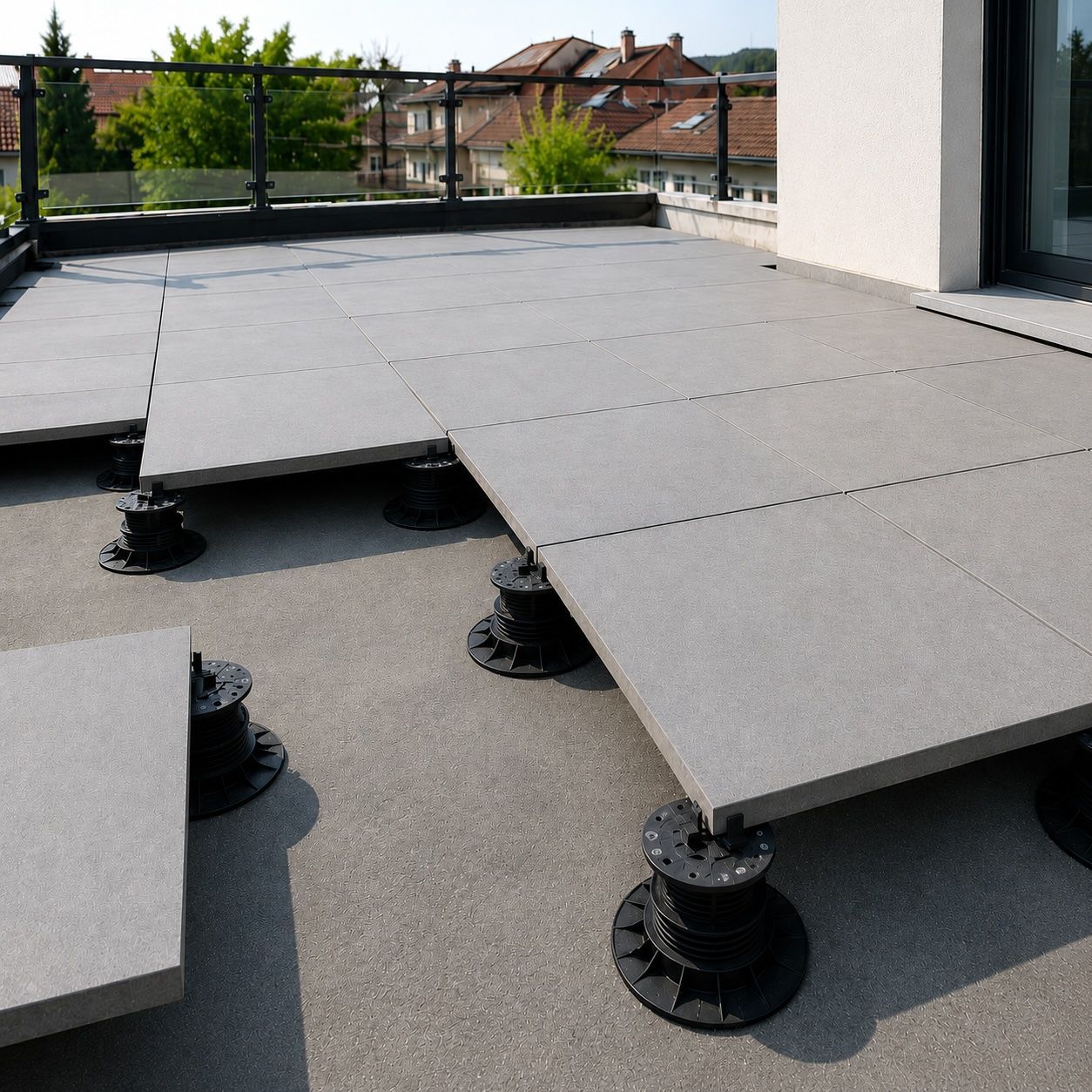
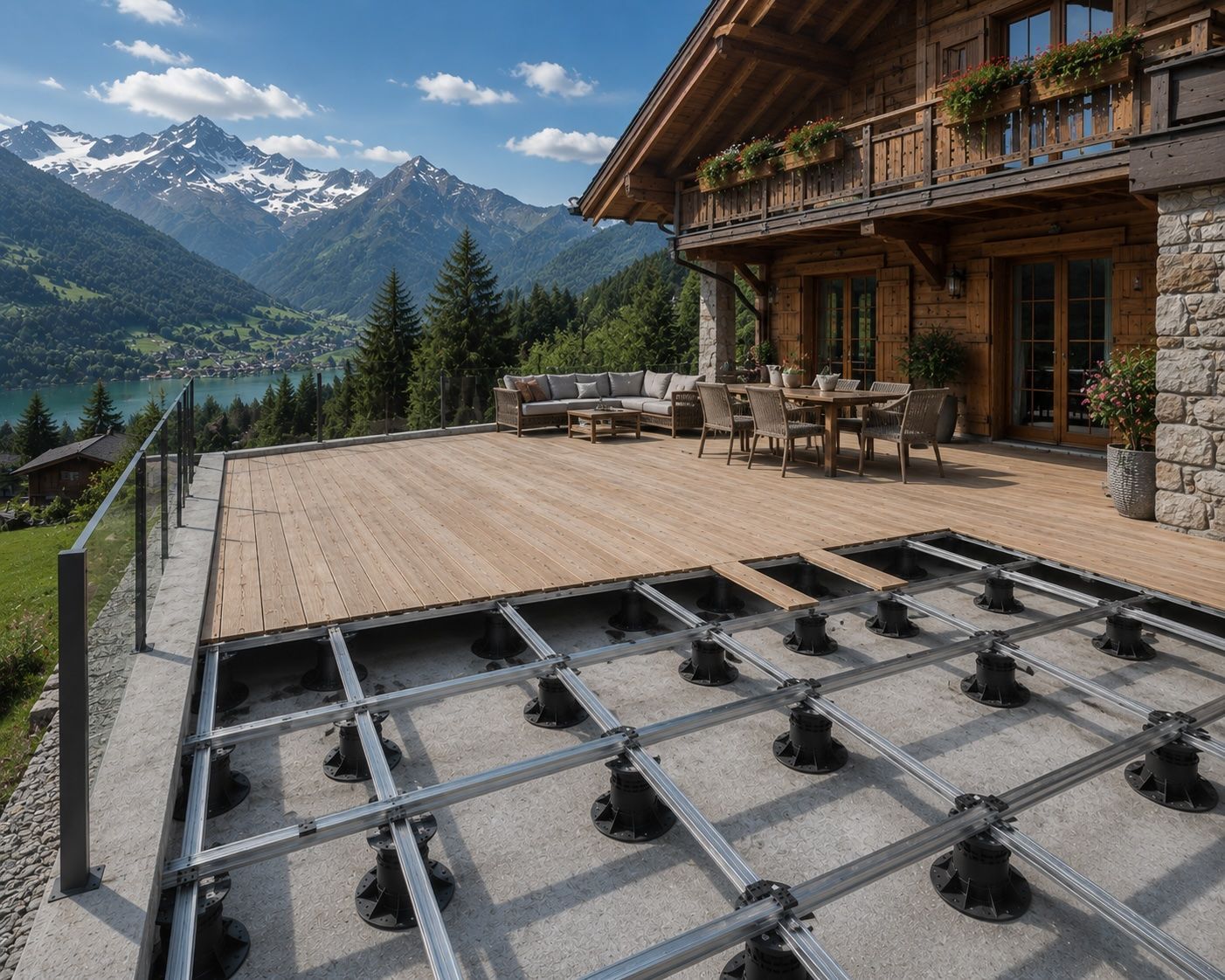
Pedestal paving (Slabs on adjustable pedestals)
Installing slabs on adjustable PVC pedestals (or plots) is a modern solution highly favoured for its speed of installation, precision levelling and versatility with different slab types. These pedestals are typically manufactured from high-strength PVC, designed to support heavy loads and withstand extreme weather variations.
The pedestal installation technique offers several distinct advantages: easy removal for maintenance or slab replacement, excellent structural stability, continuous ventilation beneath the surface, highly efficient rainwater drainage, and simplified access to any utility installations located underneath the floor.
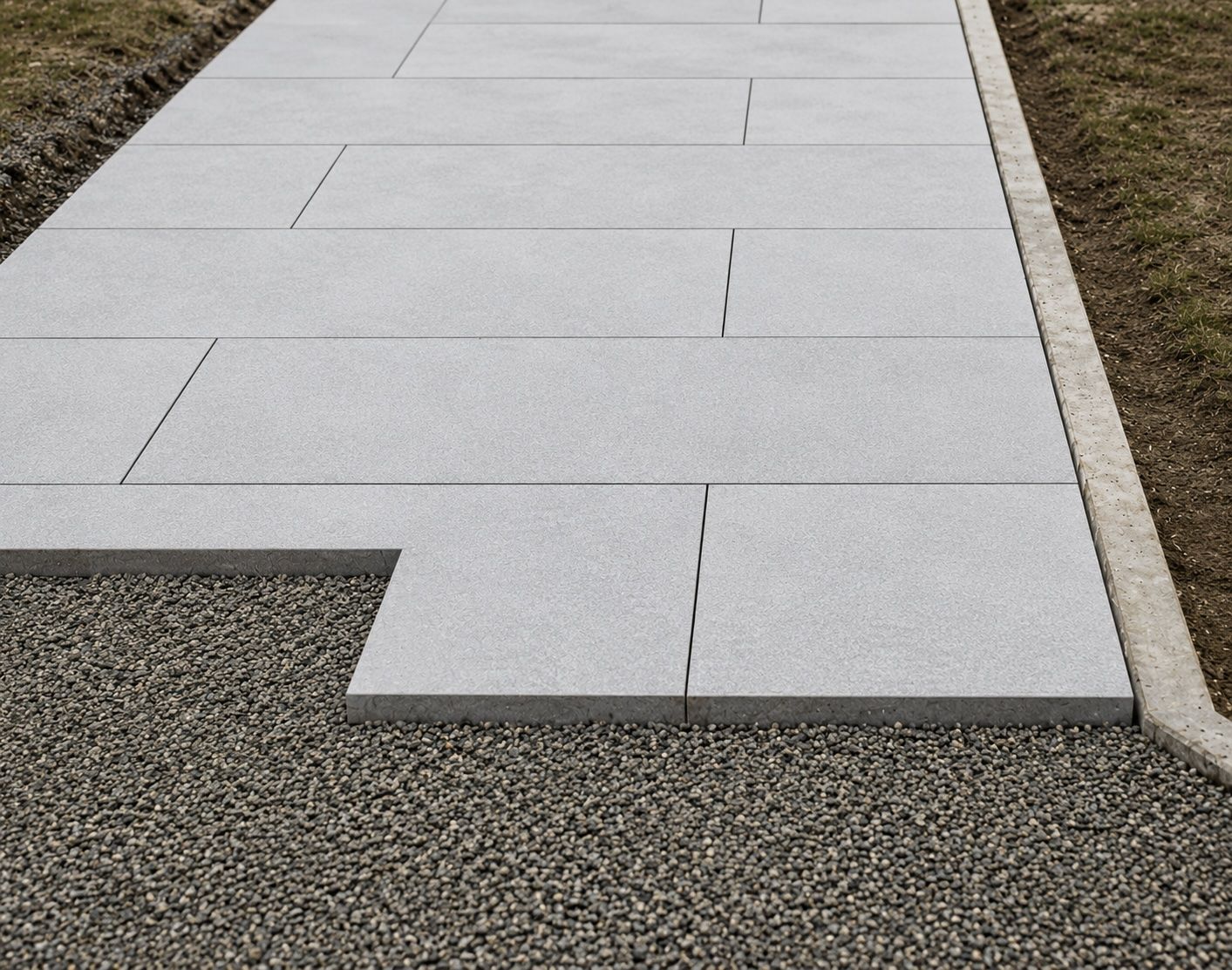
Paving on gravel
Laying slabs on a gravel bed is a popular landscaping method appreciated for its natural appearance. Perfect for garden paths, property approaches and pedestrian walkways, this technique creates highly durable surfaces that remain in perfect harmony with the surrounding outdoor environment.
Gravel installation provides excellent permeability, adapts effectively to minor ground movements and allows for incredibly easy maintenance.
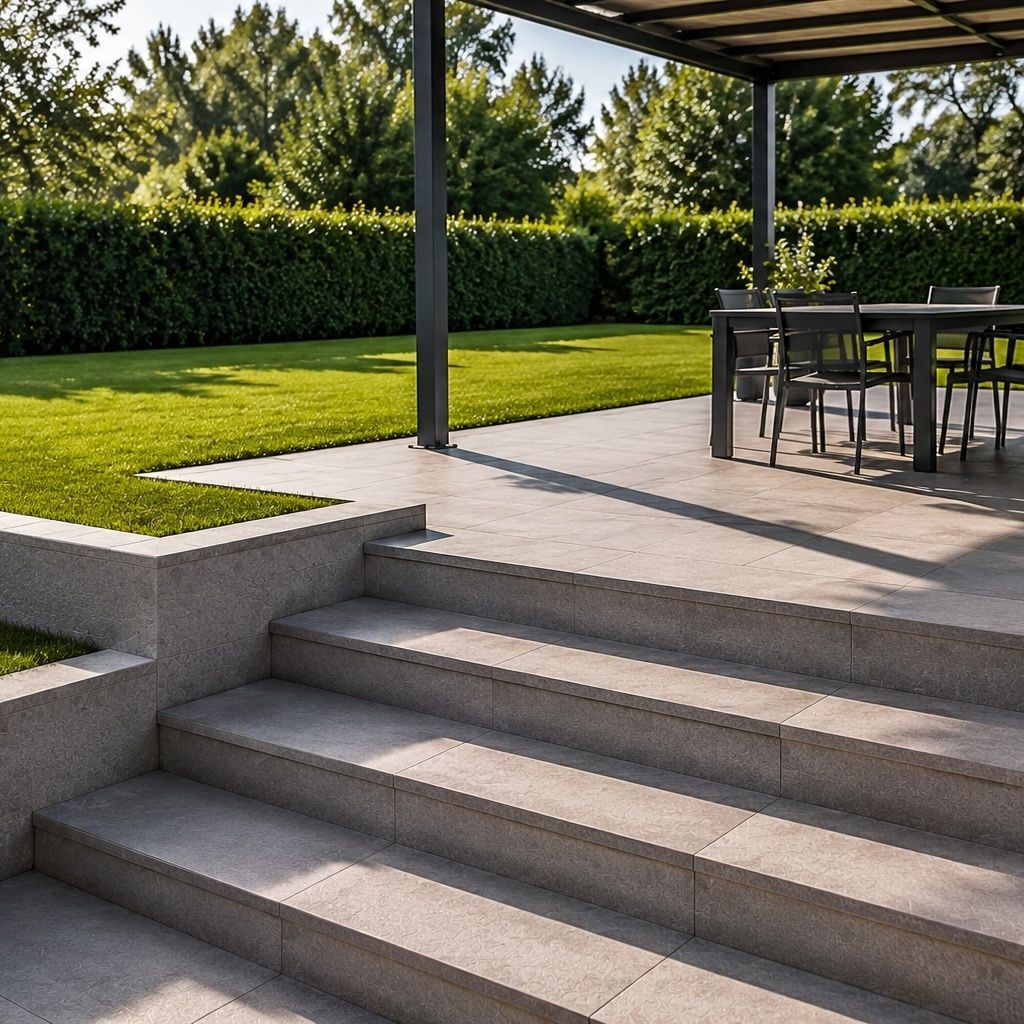
Adhesive paving (Bonded/glued slabs)
Adhesive paving installation is ideal for areas requiring precision, safety and a meticulous finish. This makes it an excellent choice for steps and staircases, as well as pool surrounds where absolute surface stability is paramount.
Bonding the slabs ensures an elegant, seamless visual continuity and a uniform finish, while offering robust resistance to water, splashes and temperature fluctuations. It also enables the use of anti-slip materials, which are essential for reducing slip hazards in high-traffic footpaths.
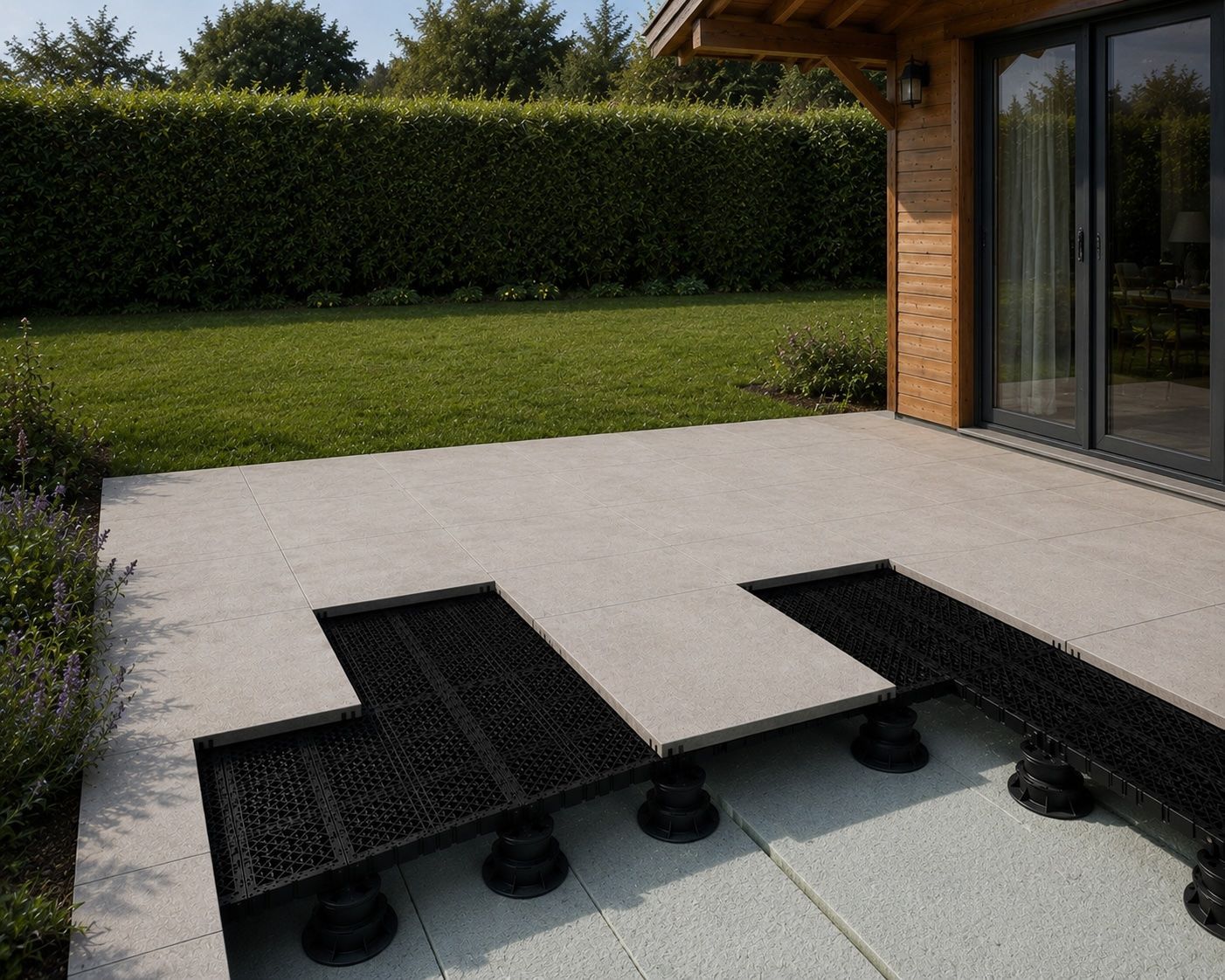
Paving on grid systems (Modular grids)
Laying slabs on modular grids is a modern, highly technical solution used to create stable, free-draining and low-maintenance outdoor surfaces. The grids are manufactured from heavy-duty materials capable of supporting significant loads while ensuring even weight distribution across a perfectly structured, uniform base.
This method is particularly suited for service pathways, pedestrian areas or any outdoor spaces requiring a reliable, long-lasting engineered structure.
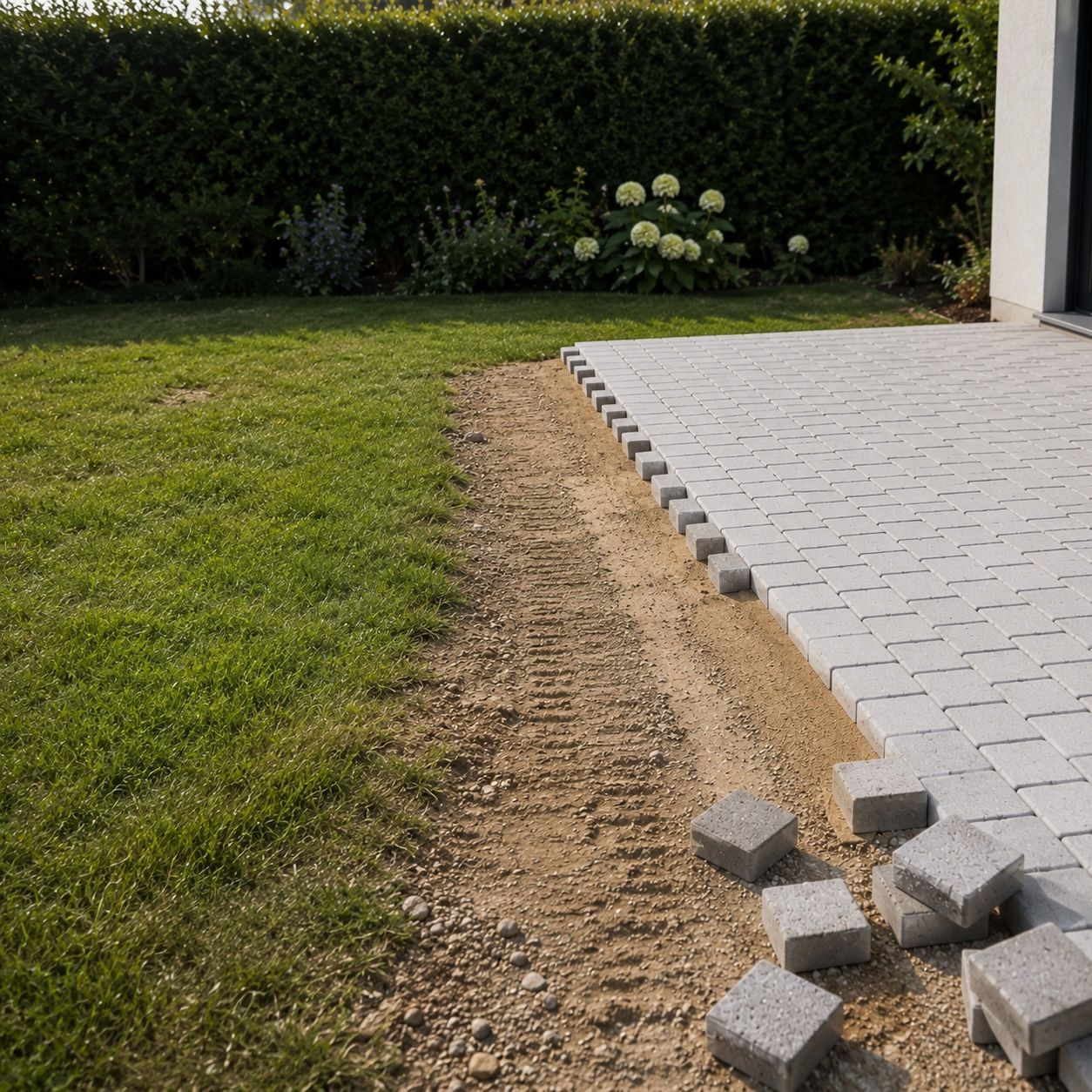
Paving on sand
Laying slabs on a sand bed is a traditional technique widely used for domestic landscaping projects such as pedestrian pathways and garden areas. This versatile technique works equally well for slabs or block paving, allowing you to create beautiful, cohesive surfaces with a variety of finishes.
It offers excellent permeability, encouraging natural water drainage, alongside a degree of flexibility that allows the surface to absorb minor ground movements.
Rail-system paving (Paving on twin tracks/rails)
Laying slabs on rail systems is an innovative technique that involves mounting the paving onto a framework of supporting rails or load-bearing profiles. These tracks serve as both a secure fixing support and a guide, ensuring completely even load distribution and an exceptionally flat finish.
The core benefits include enhanced structural stability and seamless adaptation to highly technical surfaces or projects requiring absolute flatness.
A solution tailored to each project
Contact us to choose the best installation method for your project